Say you are trying to figure out why your Aeonium’s lower leaves keep dropping onto the soil, one after another, even though you’re watering it on the same schedule you use for your Echeverias. Or maybe your plant’s rosette has curled shut like a tight fist and hasn’t opened in weeks, and you’re not sure if that’s normal or a warning sign. Aeoniums grow on a different clock than most of the succulents in a typical collection, and that difference is exactly where most of the confusion starts.
Unlike Echeveria or Sedum, Aeonium is a winter grower. It wakes up when the weather cools and light softens, and it rests hard through the heat of summer. Half the “problems” people bring me are really just the plant behaving correctly for its season, and the other half are genuine issues that need attention. Below is a symptom-by-symptom troubleshooting guide to help you tell the two apart.
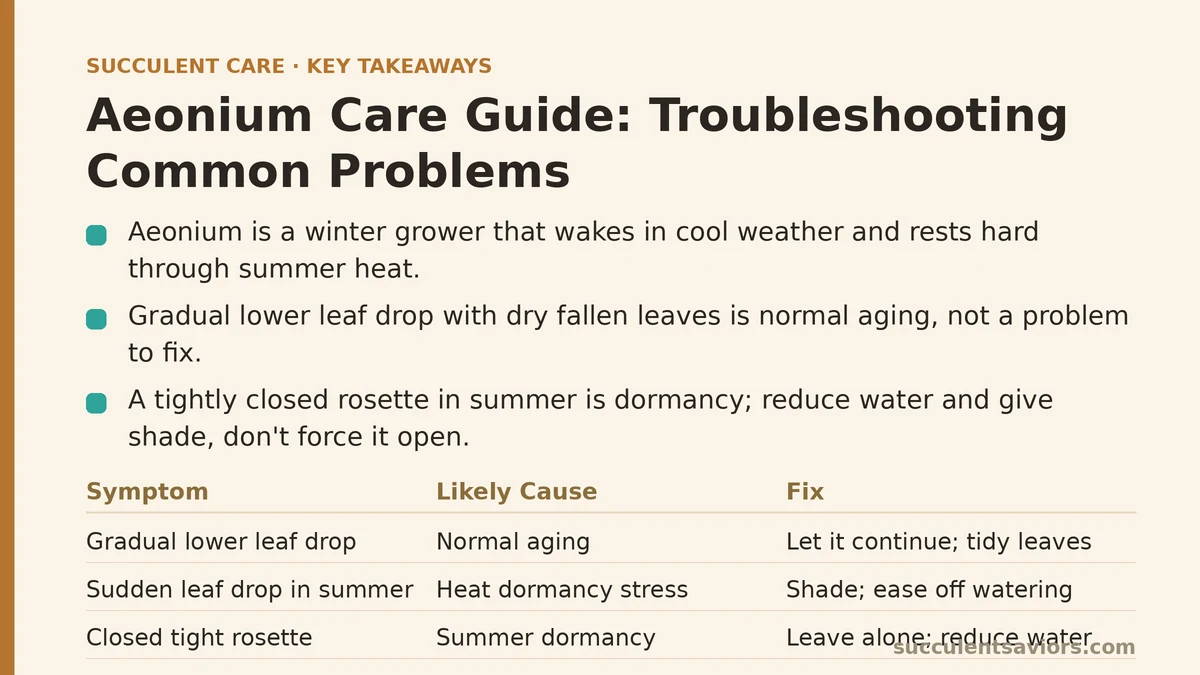
Symptom: Lower Leaves Are Dropping in a Steady Ring Around the Base
You notice a small collection of leaves accumulating on the soil surface, and the stem beneath the rosette is looking longer and barer than it used to.
The Likely Cause: In most cases, this is completely normal. Aeoniums naturally shed their oldest, lowest leaves as the plant grows and the rosette matures. This is different from a stressed plant dropping leaves in clusters or leaves that feel mushy when they fall. Healthy leaf drop is slow, one leaf at a time, and the fallen leaves are usually dry or slightly shriveled rather than soft.
However, if the leaf drop is sudden and involves many leaves at once, particularly in summer, it’s more likely a dormancy response to heat stress, and the plant is shedding leaves to conserve water while it waits out the hot months.
The Fix: If the drop is gradual and the plant otherwise looks full and firm, there’s nothing to do here except let the process continue and maybe tidy up the fallen leaves so they don’t attract pests. If the drop is sudden and tied to a summer heat wave, move the plant out of intense afternoon sun and ease off watering. Trying to “fix” summer dormancy by watering more will only invite root rot on top of the stress the plant is already managing.
Symptom: The Rosette Is Closed Tight and Won’t Open
Instead of the flat, flower-like rosette you expect, the leaves are pulled in close together, almost like a bud that refuses to bloom.
The Likely Cause: This is one of the most common points of confusion, and nine times out of ten, it’s simply the plant’s summer dormancy response. When temperatures rise and the sun is at its most intense, many Aeonium varieties close their rosettes tightly. This reduces the surface area exposed to sunlight and heat, protecting the inner leaves from scorching and slowing water loss. It’s a survival strategy, not a symptom of disease.
The Fix: Leave it alone. Reduce watering frequency to match the plant’s reduced activity, and if possible, give it a bit more shade during the hottest part of the day, especially in climates with intense summer sun. The rosette will relax and open back up on its own once temperatures drop in fall. Trying to force it open, or panicking and increasing water, tends to cause more harm than the closed rosette itself ever would.
Symptom: Leaves Are Soft, Translucent, or Turning Black at the Base
The leaves near the crown feel mushy rather than firm, and there may be a dark, wet-looking discoloration spreading up the stem.
The Likely Cause: This is root rot, almost always caused by watering during the plant’s summer dormancy or by soil that simply doesn’t drain fast enough. Aeoniums are more tolerant of water during their active winter growing season, but give them the same watering schedule through a hot, dormant summer and the roots will sit in moisture they have no use for.
The Fix: Unpot the plant right away and inspect the root system. Firm, pale roots can be saved; anything black, slimy, or foul-smelling needs to be trimmed off with sterilized scissors. If the stem itself feels soft below the rosette, cut above the damage and treat the healthy top as a cutting. Let any cut surfaces callus for several days in a dry, shaded spot before repotting into fresh, fast-draining succulent soil. Hold off on watering for at least a week to give the roots time to recover, and going forward, cut back watering dramatically once summer heat sets in.
Symptom: The Stem Is Long, Bare, and Top-Heavy
The rosette sits atop an increasingly tall, woody-looking stem with little to no foliage beneath it, and the whole plant looks like it might tip its pot over.
The Likely Cause: This is often just normal Aeonium growth habit rather than a problem to solve. Many varieties naturally develop a tree-like form over time, gaining height as older leaves drop away from the lower stem. That said, if the stem looks unusually thin and pale, or if the rosette is noticeably smaller and looser than it should be, insufficient light may also be stretching the plant faster than it would naturally branch.
The Fix: If the stem is thick, woody, and the rosette itself looks full and healthy, there’s no correction needed; this is simply the mature form of the plant, and many growers find it quite attractive. If instead the growth looks weak and stretched, move the plant to a spot with more direct morning or late afternoon sun and see if new growth comes in more compact. For an already tall, leggy stem, you can behead the plant: cut the rosette off with several inches of stem attached, let it callus, and root it in fresh soil. The original stem will often respond by pushing out new rosettes along its length, giving you a fuller, branching plant instead of one tall stalk.
Symptom: Leaf Color Has Faded to Plain Green
A variety known for deep burgundy, near-black, or variegated leaves has gradually shifted to a flatter, more uniform green.
The Likely Cause: Aeonium color intensity is directly tied to light exposure. The dramatic dark and variegated colors that make varieties like ‘Zwartkop’ or ‘Sunburst’ so popular only develop under strong, direct sunlight. Move the plant somewhere dimmer, even by a modest amount, and the coloring will fade back toward green fairly quickly as the plant prioritizes chlorophyll production over pigment.
The Fix: Gradually reintroduce the plant to more direct sun, doing this over a couple of weeks rather than all at once to avoid sunburn on leaves that have adjusted to lower light. A spot with several hours of direct morning sun tends to work well for most dark-leaved varieties. Keep in mind this is a seasonal cycle for some growers too: even well-lit plants can look a bit greener during the softer light of winter dormancy’s tail end, then deepen in color again as spring light intensifies.
Quick Reference: Aeonium Symptoms at a Glance
| Symptom | Likely Cause | Fix |
|---|---|---|
| Slow, gradual lower leaf drop | Normal aging/growth | No action needed; tidy up fallen leaves |
| Sudden leaf drop in summer | Heat-driven dormancy | Reduce water, provide afternoon shade |
| Rosette closed tight | Summer dormancy protection | Leave alone; it reopens in cooler weather |
| Mushy, dark leaves or stem | Root rot from summer watering | Trim rot, let callus, repot in dry soil |
| Tall, bare stem with full rosette | Natural mature growth habit | Optional: behead and re-root for a fuller shape |
| Faded, greener leaf color | Insufficient direct light | Gradually increase sun exposure |
Aeonium rewards a grower who’s willing to watch the calendar as much as the plant itself. Once you know that a closed rosette in July or a scattering of dropped leaves in August is the plant simply doing what it’s supposed to do, most of the anxiety disappears. Save your attention for the signs that actually point to trouble: mushy stems, unexplained sudden collapse, or fading color from a plant that used to sit in full sun and no longer does.
Has your Aeonium’s rosette ever closed up on you during summer, and did it have you worried before you realized it was just going dormant?
Related guides: Haworthia Care Guide: Solving Zebra Plant Problems, Portulacaria afra (Elephant Bush) Care Guide: A Troubleshooting Approach, and String of Pearls Care Guide (Senecio rowleyanus): A Troubleshooting Approach.