By the time you finish reading this guide, you’ll be able to look at your Haworthia and know precisely what it’s telling you—whether it’s the color of its leaves, the texture of its surface, or the way it’s sitting in its pot. You’ll be able to match a symptom to its cause and apply a fix with confidence instead of guesswork. Haworthias, often called Zebra Plants for their distinctive banded markings, are among the most forgiving succulents around, but they still have specific preferences that, when ignored, show up as clear physical symptoms.
This guide skips the generic care overview and goes straight to problem-solving. Find the symptom that matches your plant below, and work through the cause and fix together.
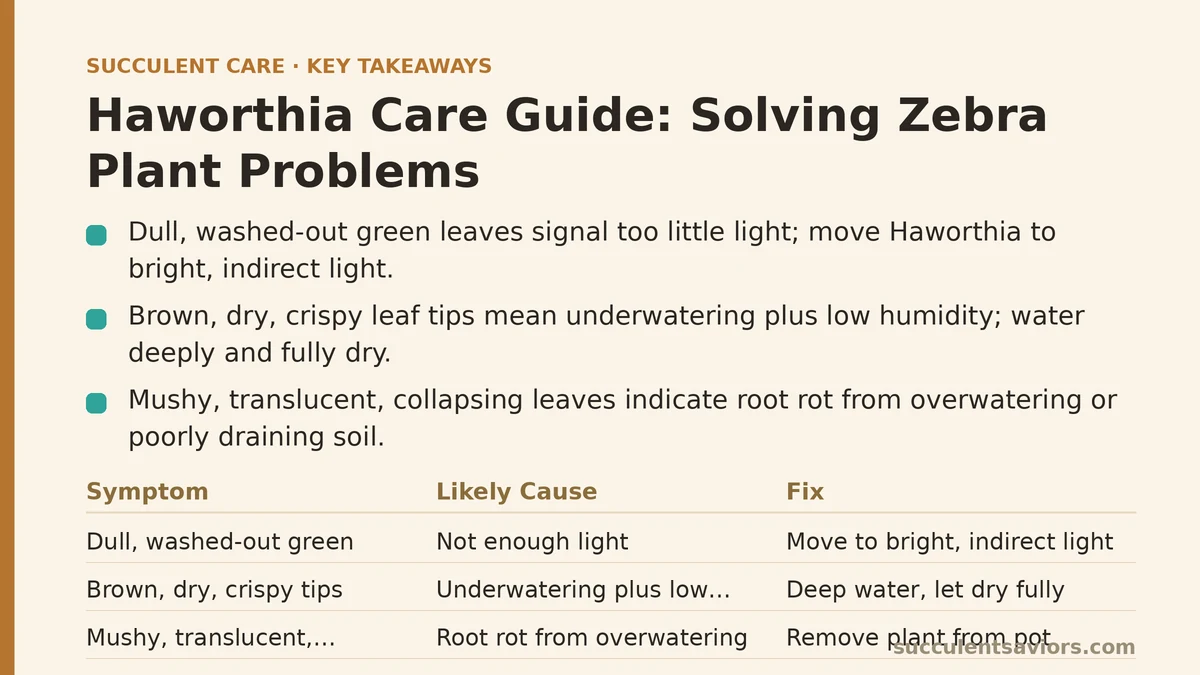
Symptom #1: The Leaves Are Losing Their Color and Turning a Dull, Washed-Out Green
Haworthias are prized for their translucent windows and bold striping, so when a plant starts looking flat and monochrome, it’s noticeable right away.
The Likely Cause: Not enough light. Haworthias tolerate lower light better than most succulents, which leads owners to assume they can thrive in dim corners indefinitely. They can survive there, but they won’t display their best coloring. Without adequate bright, indirect light, the plant stops producing the pigments that create those signature patterns.
The Correct Fix: Move the plant closer to a light source, ideally an east-facing window or a spot with several hours of bright, filtered light. Avoid harsh, direct afternoon sun, which can scorch the leaves rather than deepen their color. Give it a few weeks in the improved location before judging results; color changes in Haworthia happen gradually, not overnight. If your indoor light is limited year-round, a small grow light positioned a foot or so above the plant will bring back that vivid striping far more reliably than window light alone.
Symptom #2: The Leaf Tips Are Turning Brown, Dry, and Crispy
The base of the plant looks fine, but the tips of the leaves are shriveling into brittle, brown points.
The Likely Cause: This is almost always underwatering combined with low humidity, particularly common in centrally heated homes during colder months. Haworthias store water in their thick leaves, and when reserves run low, the plant sacrifices the tips first to protect the rest of the leaf.
The Correct Fix: Check the soil with a finger or a wooden skewer inserted a couple of inches down. If it comes out completely dry, it’s time for a deep watering. Soak the soil thoroughly until water drains from the pot’s bottom, then let it dry out fully again before the next watering. Brown tips that have already formed won’t turn green again, but consistent, thorough watering will prevent new leaves from developing the same damage. If your home runs particularly dry, especially in winter, grouping plants together or using a pebble tray can help maintain slightly higher humidity around the foliage.
Symptom #3: The Leaves Are Mushy, Translucent, or Collapsing at the Base
This symptom looks alarming because it can appear suddenly, with leaves that were firm days earlier now feeling soft and watery.
The Likely Cause: Root rot from overwatering or poorly draining soil. Haworthia roots are more delicate than they appear, and when they sit in consistently moist soil, they lose their ability to take up water and nutrients. The mushy leaves are a downstream sign that the root system underneath is already in trouble.
The Correct Fix: Remove the plant from its pot right away and inspect the roots. Firm, light-colored roots can be left alone, but anything black, slimy, or hollow needs to be trimmed away with clean scissors. If most of the root system is compromised, take healthy leaf or offset cuttings instead and start fresh. Let any cut surfaces callus for two to three days in a dry spot before placing them in gritty, fast-draining soil. Hold off on watering for about a week to give the roots time to recover or the cuttings time to establish, and consider repotting into a mix with extra perlite or pumice if drainage was the underlying issue.
Symptom #4: The Plant Looks Stretched, With Leaves Spread Far Apart and Pointing Upward
Instead of the tight, compact rosette Haworthias are known for, the plant looks loose, open, and almost reaching for something.
The Likely Cause: This is etiolation, and like the dull coloring in Symptom #1, it traces back to insufficient light—though this time the plant is stretching rather than just fading. The stem elongates and leaves space out as the plant tries to find a stronger light source.
The Correct Fix: Increase light exposure gradually to avoid shocking the plant with sudden intense sun. A brighter windowsill or supplemental grow light will stop further stretching, but existing elongated growth won’t reverse itself. If the stretching is severe, you can behead the rosette, let the cutting callus, and replant it at the proper depth in fresh soil; the original base will often produce new, more compact offsets given better light going forward.
Symptom #5: White, Powdery Spots or Fuzzy Clusters Near the Leaf Base
Small white specks that look like cotton or powder, often tucked into the crevices where leaves meet the stem, are worth investigating right away rather than waiting to see if they spread.
The Likely Cause: Mealybugs. These small pests favor the tight, protected spaces of rosette-forming succulents and feed on plant sap, weakening the Haworthia over time and leaving behind sticky residue or distorted growth.
The Correct Fix: Isolate the affected plant immediately to prevent spread to neighboring succulents. Dab visible pests with a cotton swab dipped in isopropyl alcohol, which kills them on contact. For a more thorough treatment, spray the entire plant with a diluted insecticidal soap, making sure to reach the base of the leaves where mealybugs hide. Repeat this process every week for a month, since eggs can hatch after the initial treatment and restart the infestation if you stop too soon.
Quick Reference Table
| Symptom | Likely Cause | Primary Fix |
|---|---|---|
| Dull, faded leaf color | Insufficient light | Move to brighter, indirect light or add a grow light |
| Brown, crispy leaf tips | Underwatering / low humidity | Water deeply when soil is fully dry; raise humidity |
| Mushy, translucent leaves | Root rot from overwatering | Trim rot, repot in gritty soil, or take fresh cuttings |
| Stretched, open rosette | Etiolation from low light | Increase light gradually; behead and replant if severe |
| White powdery clusters | Mealybugs | Alcohol swab, then insecticidal soap weekly |
A Few Additional Notes on Long-Term Health
Beyond troubleshooting active problems, a couple of habits will keep your Haworthia looking its best over the years. Repot every two to three years, not because the plant demands frequent disturbance, but because the soil’s structure breaks down over time and drainage suffers as a result. When you do repot, resist the urge to size up dramatically; Haworthias prefer being slightly snug in their containers, and an oversized pot holds excess moisture that the roots don’t need.
It’s also worth noting that different Haworthia varieties have slightly different tolerances. The softer-leaved types, like Haworthia cooperi, tend to be more sensitive to direct sun than the hardier, more architectural species like Haworthia attenuata. If you’re troubleshooting color or scorch issues, factor in which type you’re growing before assuming the fix is identical across your whole collection.
Which symptom brought you here today—faded color, stretched growth, or something in the roots you weren’t expecting to find?
Related guides: Aeonium Care Guide: Troubleshooting Common Problems, Portulacaria afra (Elephant Bush) Care Guide: A Troubleshooting Approach, and String of Pearls Care Guide (Senecio rowleyanus): A Troubleshooting Approach.