A Jade Plant, or Crassula ovata, is a woody-stemmed, thick-leaved succulent native to South Africa and Mozambique, prized for its tree-like growth habit and its ability to live for decades with minimal intervention. It stores water in its rounded, glossy leaves, which means its care revolves almost entirely around replicating the boom-and-bust rainfall pattern of its native habitat rather than a steady, gentle drip of moisture.
That single fact explains most of what goes wrong with this plant. But not every care factor carries equal weight. Some mistakes will kill a Jade Plant within weeks; others just slow it down or make it look a little less impressive. Below is a ranked breakdown of the five factors that matter most, starting with the one that ends careers—plant careers, that is.
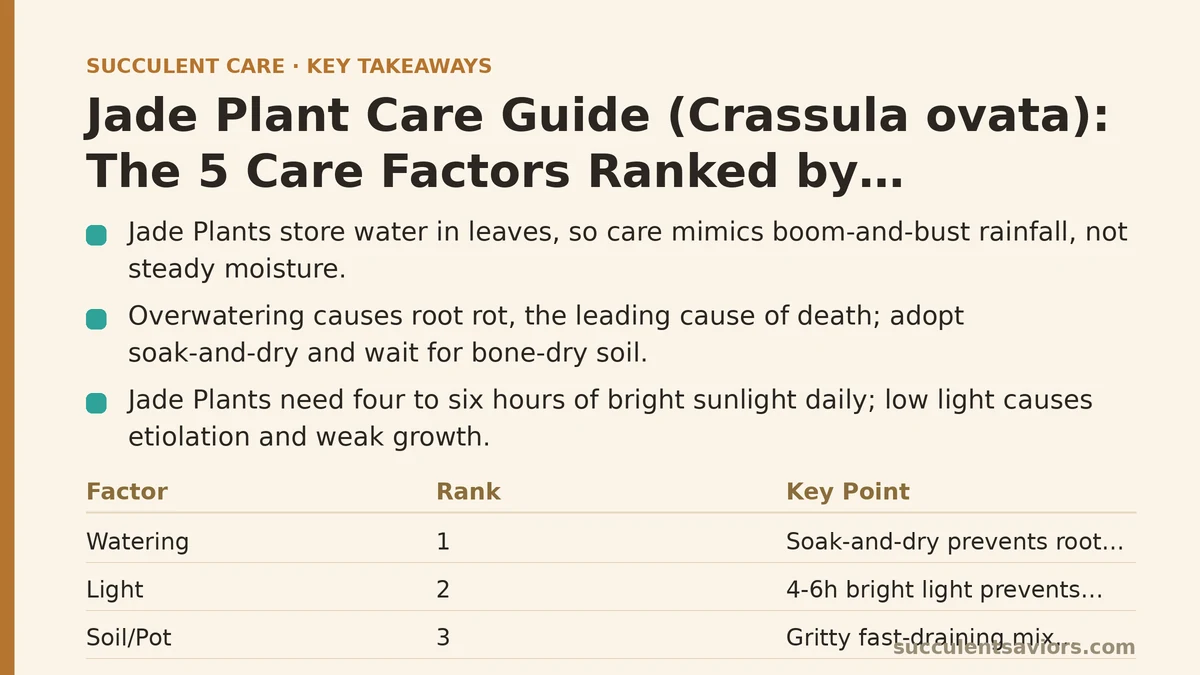
1. Watering Frequency (The Make-or-Break Factor)
Nothing on this list comes close to watering in terms of how many Jade Plants it saves or destroys. This is a plant built to survive months of drought punctuated by heavy, infrequent rain, and it has zero tolerance for soil that stays damp for extended periods.
Root rot from overwatering is, without question, the leading cause of death for Crassula ovata. It typically starts quietly: a lower leaf or two turns translucent and mushy, then drops. By the time several leaves have fallen at once, the roots underneath the soil are often already compromised.
The fix is the soak-and-dry method, applied with real patience. Water thoroughly until it runs from the drainage holes, then don’t touch the plant again until the soil is bone dry all the way through the pot—not just dry on the surface. Depending on your home’s humidity and light levels, this can mean waiting two to four weeks between waterings, sometimes longer in winter. If you take away only one lesson from this guide, let it be this: when in doubt, wait another few days.
2. Light Exposure (The Difference Between Thriving and Merely Surviving)
Light ranks second because, while it rarely kills a Jade Plant outright, insufficient light quietly undermines everything else. A Jade Plant kept in low light will stretch, weaken, and become far more vulnerable to the overwatering problems described above, since a struggling plant uses water more slowly and stays wet longer.
Jade Plants want at least four to six hours of bright, direct or very bright indirect sunlight daily. A south- or west-facing windowsill is often ideal. Insufficient light produces the telltale signs of etiolation: long gaps between leaves, a pale or washed-out green color, and stems that lean dramatically toward the nearest window.
There’s also a reward for getting light right that most other succulents don’t offer quite so visibly: red-tinged leaf margins. When a Jade Plant receives strong, consistent light, especially with a bit of temperature stress, the edges of its leaves blush red or pink. This coloring is essentially a visible confirmation that your lighting setup is working.
3. Soil and Pot Choice (The Foundation That Prevents Problem #1)
Soil composition earns the third spot because it directly supports or undermines your watering strategy. Even a careful, patient waterer will struggle if the soil itself holds moisture too long.
Jade Plants need a fast-draining, gritty mix—think a standard succulent or cactus soil amended further with pumice, perlite, or coarse sand until water passes through it within seconds of pouring. A dense, moisture-retentive potting mix is one of the most common hidden causes of “unexplained” root rot, since the grower may be watering on a perfectly reasonable schedule while the soil itself stays wet for days too long.
Pot material matters here too. Unglazed terracotta is particularly well-suited to Jade Plants because it’s porous and wicks excess moisture away from the roots, drying out faster than plastic or glazed ceramic. Always choose a pot with a drainage hole; a Jade Plant in a sealed container is a rot situation waiting to happen, regardless of how carefully you water.
4. Temperature and Seasonal Adjustment (Important, But Forgiving)
Temperature ranks fourth because Jade Plants are more adaptable here than many succulents, tolerating a fairly wide range of household conditions without complaint. Still, getting this factor wrong will show up in growth patterns and long-term plant shape.
Crassula ovata prefers daytime temperatures between 65-75°F (18-24°C) and can handle brief dips into the 50s at night, which actually encourages that red leaf-tip coloring mentioned earlier. What it cannot tolerate is frost. A single freezing night will turn leaves black and mushy, often beyond saving.
Seasonal adjustment matters as much as absolute temperature. As light levels and temperatures drop in fall and winter, Jade Plants slow their growth substantially and need noticeably less water—sometimes just once every six to eight weeks. Growers who keep watering at a summer pace through winter are, in effect, reintroducing the Problem #1 root rot risk through the back door.
5. Pruning and Shaping (The Finishing Touch, Not a Survival Issue)
Pruning sits at the bottom of this list because a Jade Plant will live a long, healthy life without ever being trimmed. This factor is about aesthetics and long-term structure rather than survival.
Left alone, Jade Plants can become top-heavy, with long, leggy branches that eventually snap under their own weight. Pruning back leggy growth encourages a thicker, more tree-like trunk and a fuller canopy, mimicking the bonsai-style forms this plant is famous for in cultivation. Cuts should be made just above a leaf node with clean, sterile scissors, and the removed stem tips can be left to callus for a few days before being propagated in dry, gritty soil.
Because this factor has the smallest impact on whether your plant survives, it’s the right place to experiment. If you’re new to Jade Plants, get watering, light, and soil right first. Shaping and propagating can come later, once you’ve built confidence with the fundamentals.
Quick Reference: The Five Factors Ranked
| Rank | Care Factor | Why It Ranks Here |
|---|---|---|
| 1 | Watering Frequency | Overwatering is the single most common cause of death; this is non-negotiable. |
| 2 | Light Exposure | Low light weakens the plant and worsens overwatering risk. |
| 3 | Soil & Pot Choice | Directly enables or undermines correct watering. |
| 4 | Temperature | Fairly forgiving, but frost and winter watering habits still matter. |
| 5 | Pruning & Shaping | Purely cosmetic and structural; low stakes for survival. |
A well-cared-for Jade Plant can outlive the person who potted it, passed down as a cutting from one generation to the next. Getting the first two factors right—patient watering and strong light—solves the vast majority of problems growers encounter, and everything else on this list is really just refinement from there.
Of these five factors, which one has given you the most trouble with your own Jade Plant—getting the watering interval right, or finding a spot bright enough to keep it compact?
Related guides: Cactus vs. Succulent: What’s the Difference?, Crassula Perforata String of Buttons Care Guide: Separating Myth From Reality, and Haworthia Care Guide: Solving Zebra Plant Problems.