Most people assume a fuzzy succulent needs gentle handling—light misting, soft soil, and a shady corner. That assumption is precisely why so many panda plants end up with rot, scorched leaves, or a permanently droopy appearance. Kalanchoe tomentosa is not fragile. It’s a tough, drought-adapted plant from Madagascar with a velvet coating that solves problems, not creates them. The real care challenges all come from treating it like a delicate houseplant instead of the resilient succulent it is.
This guide walks through the four most dangerous myths about panda plant care, one by one. Each myth gets a reality check, a clear explanation of what happens in practice, and the specific steps to keep your plant thriving.
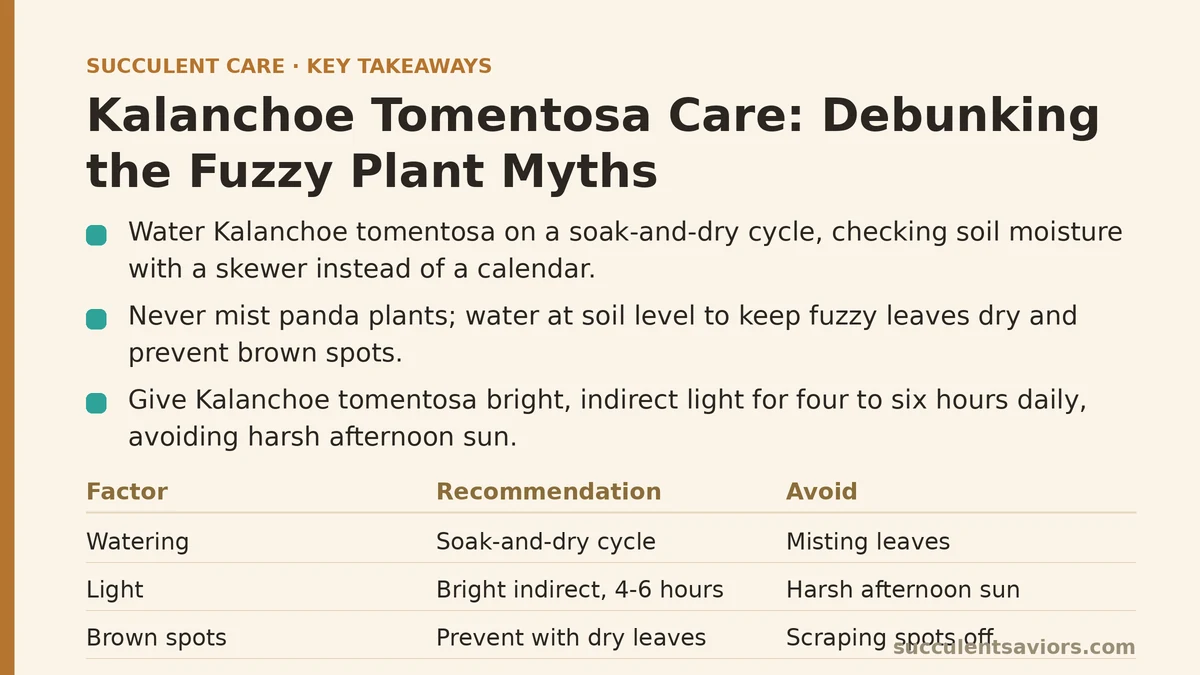
Myth #1: “Fuzzy Leaves Mean Keep Them Dry — Always”
The brown velvet hairs on a panda plant’s leaves are called trichomes. They evolved to reflect intense sunlight and reduce water loss. That coating makes people think the plant wants zero water, so they either underwater until the leaves wrinkle like prunes or they water so rarely the roots desiccate completely.
The Reality: Kalanchoe tomentosa needs water on a regular soak-and-dry cycle, just like any other succulent. The difference is that it can tolerate drought much longer than smooth-leaved succulents, which lures owners into neglect.
The fix: check the soil, not the calendar. Stick a wooden skewer two inches into the pot. If it comes out with moist soil clinging to it, wait. If it’s bone dry, water thoroughly until water runs from the drainage holes. Then wait until the soil is dry again before repeating. In summer, this often means every one to two weeks. In winter, it can stretch to once a month or even longer. But the plant always tells you through the soil, not the clock.
Myth #2: “Brown Spots on the Leaves Mean a Pest Problem”
The underside edges of panda plant leaves often show a reddish-brown margin. When the same brown appears as blotches or scattered patches, most people panic and start treating for spider mites or fungus.
The Reality: Brown spots most often come from water sitting on the fuzzy leaves. The trichomes trap moisture against the leaf surface, and that trapped water acts like a magnifying glass in bright light, cooking the leaf tissue underneath. Even less intense light combined with lingering droplets can promote fungal spotting.
The fix is twofold. First, never mist a panda plant—ever. Misting is the single fastest way to ruin the velvety coating and encourage rot. Second, water at the soil level using a narrow-spout watering can or a squeeze bottle, keeping every drop off the foliage. If you do splash a leaf, blot it dry gently with a soft cloth before the light has a chance to intensify the droplet.
If brown spots already exist, they won’t heal. Leave them as a reminder and let new growth stay clean. Do not scrape the spots off; that damages the trichome layer further.
Myth #3: “Full Sun Will Scorch the Velvet”
Because the plant’s natural habitat includes rocky, exposed slopes, many people assume it can handle hours of intense direct sun. Others, seeing the soft texture, do the opposite and keep it in a dim corner. Both extremes cause problems.
The Reality: Kalanchoe tomentosa wants bright, indirect light for at least four to six hours a day. It can handle some gentle morning sun, but harsh afternoon sun—especially through a window that magnifies heat—will cause the brown leaf margins to become pale, crispy, and bleached. The plant’s fuzzy coating, which helps outdoors, works against it indoors where light passes through glass and concentrates.
Conversely, a low-light spot causes etiolation. The stems stretch, leaves space out, and the fuzzy green color washes out to a pale, sickly tone. That stretched growth won’t tighten back up.
The fix: aim for an east-facing windowsill or a south-facing window with a sheer curtain. If you only have a bright, hot west window, set the plant a few feet back from the glass. A grow light, hung six to ten inches above the plant on a 10-hour timer, works just as well during short winter days.
Myth #4: “A Leggy Stem Just Needs More Water”
When a panda plant starts looking sparse, with bare stem between leaves, the instinct is to water more, assuming the plant is thirsty and dropping lower leaves to save energy.
The Reality: Legginess in this species is a light problem, not a water problem. Leaves that fall off are usually being shed because the stem is reaching for more photons, not because the roots are dry. Overwatering in response to legginess makes the situation measurably worse: the roots rot, the stem softens, and the plant collapses.
The fix: move the plant to a brighter location and, once new growth starts coming in tight and compact, prune the long stem. Cut just above a leaf node, let the cutting callus for three to five days, then plant it directly into dry succulent soil. The old stem will also often push new growth from the cut point, giving you two plants from one.
Care Quick Reference: Myth vs. Reality
| Common Belief | What Works | Why It Matters |
|---|---|---|
| Keep fuzzy leaves bone dry | Water deeply when soil is completely dry | Prevents root desiccation while avoiding rot |
| Brown spots = pests | Keep water off the leaves entirely | Stops fungal and thermal leaf damage |
| Full sun is fine indoors | Bright, indirect light, or morning sun only | Prevents scorched leaves and pale growth |
| Leggy stems need more water | Provide more light, then prune and reroot | Stops etiolation and prevents overwatering rot |
What This Looks Like in a Real Home
Picture a panda plant sitting on a bright kitchen counter, about three feet from a south-facing window with a curtain. The owner waters it every time the top half-inch of soil feels dry—which turns out to be about every ten days during spring. The leaves stay plump, the fuzz stays silvery-gray, and the brown tips stay a warm, even rust color.
Now picture the same plant owner, four months later, moving the plant to a bathroom shelf with a small east window. Within six weeks, the stems start reaching, the lower leaves shed, and the plant looks like a fuzzy stick with a few leaves on top. That’s not a watering failure. That’s a light failure.
The difference between those two images is straightforward information, not a green thumb. A panda plant will grow happily for years if you treat it as the tough, light-hungry succulent it is—not the fragile velvet ornament people assume it is.
Which myth has cost you a panda plant—the misting habit, or the move to a darker corner? Let me know in the comments, and I’ll help you diagnose the next step.
Related guides: Haworthia Care Guide: Solving Zebra Plant Problems, Jade Plant Care Guide (Crassula ovata): The 5 Care Factors Ranked by Importance, and Aeonium Care Guide: Troubleshooting Common Problems.