Moonstones (Pachyphytum oviferum) are the succulents that look like they were sculpted from frosted glass. Those plump, rounded leaves with their powdery blue-white coating make them one of the most distinctive plants in any collection. They are also remarkably honest. When something is wrong, they don’t hide it. The leaves soften, the color shifts, the stems stretch. The trick is knowing which symptom maps to which cause.
This guide uses a symptom-first approach. If your moonstone looks off, find the symptom below, read the likely cause, and apply the fix. Most moonstone problems resolve quickly once you address the root issue.
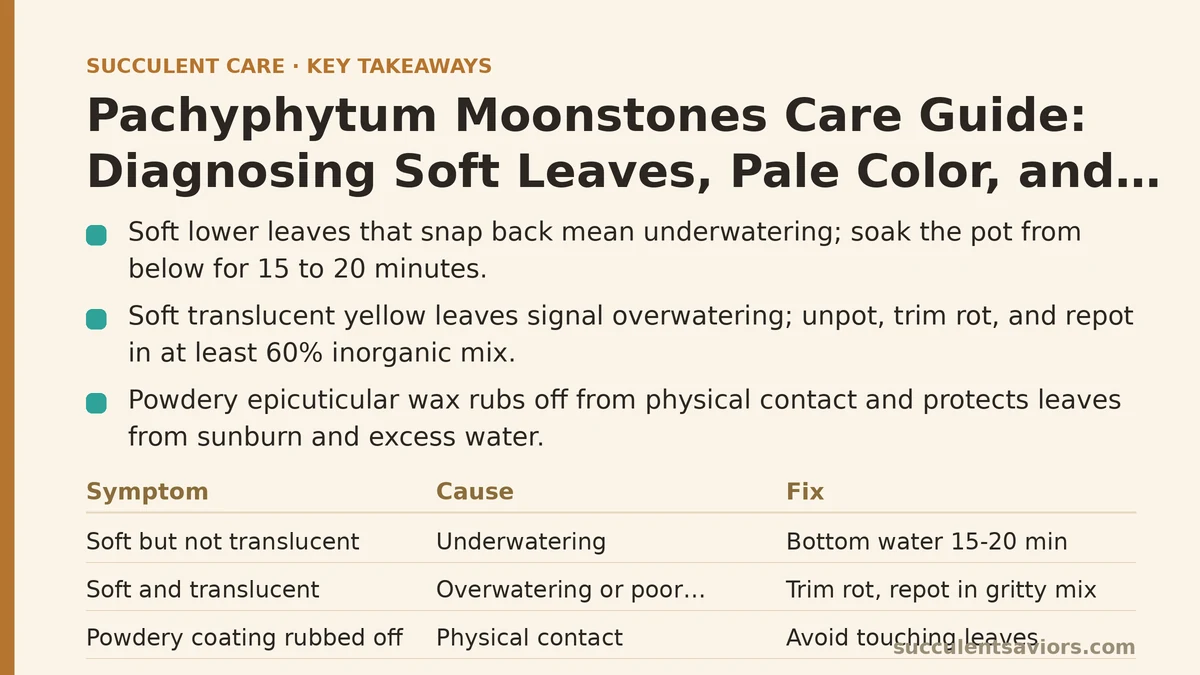
Symptom #1: Leaves Feel Soft or Spongy (But Not Translucent)
Pick up the plant and gently squeeze one of the lower leaves. A healthy moonstone leaf is firm, with a slight give that snaps right back. If it feels spongy or deflated, like a balloon losing air, you’re seeing one of two things.
The Likely Cause: Underwatering. Moonstones store water in those thick leaves, and when the reserves run low, the leaves soften from the bottom up. This is more common than overwatering in this species because people often treat it like other succulents and wait too long between waterings. The plant tolerates it, but it won’t thrive.
The Correct Fix: Give it a thorough soak. Use the bottom-watering method: set the pot in a tray of water and let it drink from below for 15 to 20 minutes. You’ll see the leaves firm up within a day or two. Going forward, don’t wait for the leaves to get spongy every time. Instead, check the soil with your finger—if the top two inches are bone dry, water it. Moonstones like a slightly more consistent schedule than other succulents, especially during their active growing season in spring and fall.
Symptom #2: Leaves Are Soft AND Translucent or Yellowish
This is the danger signal. The leaves aren’t just soft—they look slightly see-through, with a yellowish or brownish tinge. If you press them, they might even burst. This is not the same as gentle underwatering. This is cellular damage from excess water.
The Likely Cause: Overwatering or poor drainage. The roots have been sitting in waterlogged soil, and they’ve started to rot. That rot travels up the stem and into the leaves, which start breaking down from the inside. This happens fast. A badly overwatered moonstone can move from looking fine to losing leaves in under a week.
The Correct Fix: Act immediately. Unpot the plant and inspect the roots. Healthy roots are light-colored and firm. Rotted roots are dark, mushy, and may have a sour smell. Trim off every piece of rotted tissue with sterile scissors. If the stem is also soft, cut it back to firm, healthy tissue. Let the plant air-dry for three to five days in a shaded spot so the wounds callus over. Then repot into a mix that’s at least 60% inorganic material—perlite, pumice, or coarse sand—and only water after a full week has passed. After that, switch to the soak-and-dry method and check the soil every single time before watering.
Symptom #3: The Powdery Coating (Epicuticular Wax) Is Rubbing Off
Run your finger across a healthy moonstone leaf and you’ll feel that fine, chalky powder. It’s not dirt—it’s a natural wax layer that protects the leaves from sunburn and helps shed excess water. When you see bare, shiny patches, something has been wiping it away.
The Likely Cause: Physical contact. It could be you brushing against the plant while watering, or the leaves rubbing against each other when the plant is bumped or moved. In some cases, it’s from using a spray bottle to mist the leaves, which can wash off the powder.
The Correct Fix: Handle the plant strictly by the pot. Don’t touch the leaves unless you’re inspecting them for pests. When you move the plant, support it from underneath the pot, not by the leaves. If the plant is crowded in its container and leaves are rubbing, repot into something slightly larger. The powder will not regrow on existing leaves, but new leaves will develop a fresh coating. In time, the damage grows out.
Symptom #4: Leaves Are Pale, Washed-Out, or Turning Green
Moonstones in ideal conditions have that distinctive frosted blue or even a faint pinkish blush at the tips. If your plant looks more like a plain green echeveria, something about the light is off.
The Likely Cause: Not enough light, but not in the way you might think. Moonstones need bright, direct sunlight for several hours a day to produce that blue-white coating. In lower light, the plant produces more chlorophyll to capture what little light is available, which makes the leaves look greener. The wax coating also thins out.
The Correct Fix: Move the plant to a brighter spot. A south-facing or west-facing windowsill is ideal. If you don’t have that option indoors, a full-spectrum grow light works well. Position it six to ten inches above the plant and run it for 10 to 12 hours daily. When you do this, introduce the brighter light gradually over a week to avoid sunburn. With consistent bright light, new leaves will come in with that classic powdery blue tone.
Symptom #5: Stems Are Stretching, with Big Gaps Between Leaves
The plant looks tall and open, with leaf pairs widely spaced along the stem. The bottom leaves might be flattening out or curling downward. This is the classic stretched look that growers call etiolation.
The Likely Cause: Insufficient light combined with normal growth. As the plant reaches for more light, the stem elongates between leaf nodes. Similar to the pale leaf issue, this is a light deficiency signal. But once the stem has stretched, it stays stretched. The plant will not tighten back up on its own.
The Correct Fix: Fix the light first—use the same bright-sunlight or grow-light solution as above. Then decide whether to behead or live with the stretched look. If you want a compact plant again, cut the stem at a point where the leaves are still closely spaced, let the cutting callus for several days, and plant it in dry soil. The original stem will often push out new growth from the cut point too, giving you two plants from one. If you’re fine with the leggy look, just leave it—the new growth at the top will stay compact once the light is abundant.
Quick Reference: Symptom to Solution
| Symptom | Likely Cause | Primary Fix |
|---|---|---|
| Soft, spongy leaves | Underwatering | Soak thoroughly by bottom watering; water when top 2 inches of soil are dry |
| Soft + translucent leaves | Overwatering / root rot | Unpot, trim rot, let callus, repot in gritty mix, wait a week before watering |
| Powdery coating wearing off | Physical contact | Handle by the pot only; stop misting; repot if leaves rub together |
| Leaves turning plain green | Insufficient light | Move to bright direct sun or add a grow light for 10–12 hours daily |
| Stems stretched, wide leaf gaps | Etiolation from low light | Increase light; behead and reroot for a compact plant |
What “Normal” Looks Like
A healthy moonstone has leaves that are plump and firm, with a uniform frost-blue coating. The plant grows slowly, but steadily, adding new leaf pairs at the center rosette. In spring and fall—its two active growing seasons—it can handle a bit more water and appreciates it. In summer heat and winter cold, it slows down considerably. During those slower months, reduce watering frequency by half and prioritize bright light over anything else.
Watch for the early signs before they become emergencies. A slightly soft lower leaf that firms up after watering is a normal cycle. A translucent leaf on a wet soil bed is a red flag that demands immediate action. Learning to read the difference is the single most useful skill for keeping moonstones long-term.
Which symptom has tripped you up most with moonstones—the soft-leaf confusion between under- and overwatering, or the stretched stems that appear even in a bright window?
Related guides: Aeonium Care Guide: Troubleshooting Common Problems, Agave Care Guide: Types and Care Tips for a Thriving Collection, and Step-by-Step Guide to Repotting Succulents Without Shock.