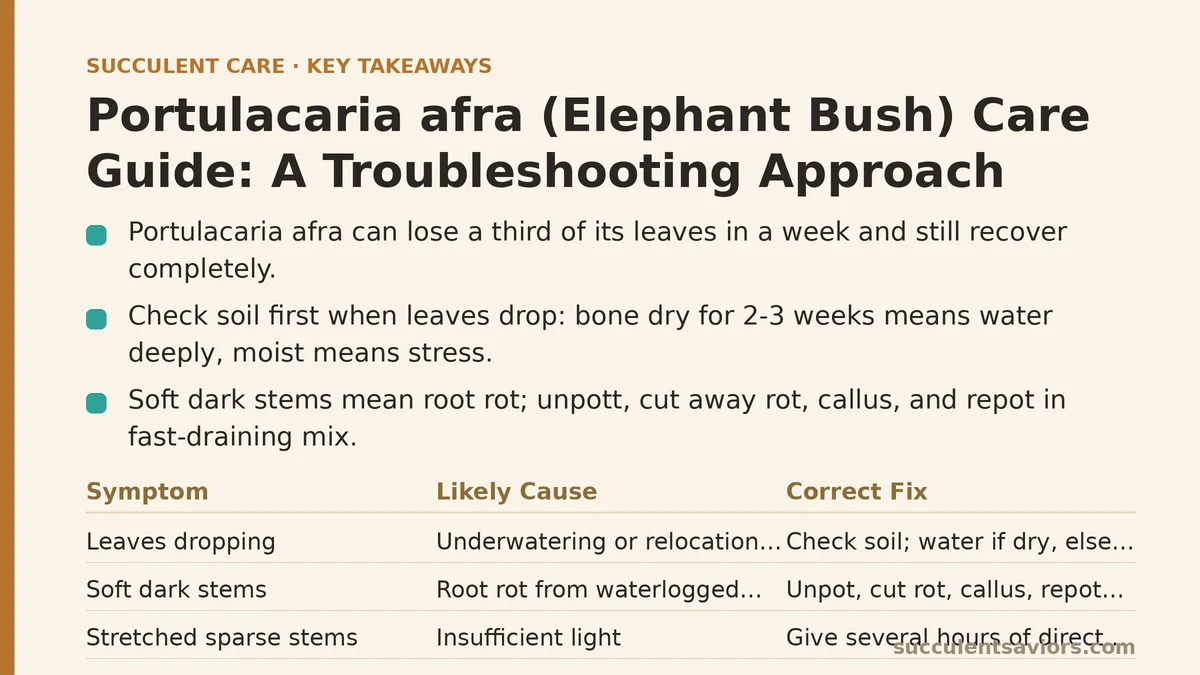
Portulacaria afra can lose a third of its leaves in a week and still recover completely, something that would kill most succulents outright. That resilience is exactly why it confuses so many owners: the plant tolerates neglect so well that when something finally does go wrong, people assume it’s fatal. In most cases, it isn’t. Elephant Bush is closer to a bonsai-friendly shrub than a fussy rosette succulent, and it drops broad hints about what it needs, if you know how to read them.
This guide is built around symptoms, not a generic watering schedule. Find what your plant is doing, match it to the likely cause, and apply the fix.
Symptom #1: Leaves Are Dropping Off in Large Numbers
You brush past the plant, or move it to a new spot, and leaves rain down onto the table. The stems stay green, but the plant looks thinner by the day.
The Likely Cause: This is usually one of two things: transplant/relocation stress, or underwatering severe enough that the plant is sacrificing leaves to conserve moisture. Portulacaria afra stores water in both its leaves and its thick, jade-like stems, so when reserves run low, the leaves are the first thing to go.
The Correct Fix: Check the soil first. If it’s been bone dry for more than two or three weeks, water deeply and expect new leaf buds to appear within a few weeks. If the soil is still slightly moist and the plant was recently moved, repotted, or exposed to a sudden temperature swing, the drop is likely stress-related rather than thirst-related, and no watering change is needed. In that case, leave the plant alone, keep light and temperature stable, and give it a month to settle. Leaf drop from stress alone typically stops on its own once the plant adjusts.
Symptom #2: Stems Are Soft, Dark, or Collapsing Near the Soil Line
The lower stem looks wrinkled at first, then turns brown or black and feels mushy when you press it. Leaves above the affected area may yellow or drop suddenly.
The Likely Cause: Root or stem rot from waterlogged soil. Elephant Bush is drought-tolerant to an extreme degree, and its roots simply cannot handle standing in wet soil for extended periods. This is almost always tied to dense potting mix, a pot without drainage, or a watering routine that doesn’t account for slower drying in cooler months.
The Correct Fix: Unpot the plant right away. Rinse the roots gently and look for anything black, slimy, or foul-smelling; healthy roots are pale and firm. Cut away all affected tissue with a clean, sterile blade, working back into healthy stem until you see solid green or white tissue with no discoloration. Let the cut plant sit somewhere dry and shaded for two to three days to callus. Repot into a fast-draining mix, ideally something with 50% or more mineral grit, and hold off on watering for at least a week. If the base is too far gone to save, take several healthy stem cuttings instead; Elephant Bush roots readily from cuttings and this is often the fastest path back to a full plant.
Symptom #3: Stems Are Stretched, Spindly, and Sparse
New growth comes in thin and pale, with long gaps between leaf pairs. The plant starts to look more like a vine reaching for something than a compact little tree.
The Likely Cause: Insufficient light. This is the single most common issue with indoor Elephant Bush, since the plant wants several hours of direct or very bright light daily to stay dense and compact. Without it, it stretches toward whatever light source is available, producing weak, elongated growth.
The Correct Fix: Move the plant to your brightest window, ideally one with some direct morning or late afternoon sun, and rotate the pot every week or two so growth doesn’t lean permanently in one direction. If natural light is limited, a small grow light run for 10-12 hours a day will tighten new growth within a month or two. For stems that have already stretched, pruning is your best tool: cut back the leggy sections just above a leaf node, and use the trimmings as cuttings. New growth from the pruned stem will come in denser under improved light, and you’ll double your plant count in the process.
Symptom #4: Leaves Turning Yellow, Especially Older Ones Lower on the Stem
A few of the oldest, lowest leaves yellow and drop while the rest of the plant looks fine. This one causes a lot of unnecessary worry.
The Likely Cause: In most cases, this is completely normal. Elephant Bush sheds its oldest leaves periodically as part of natural growth, especially as the plant matures and puts energy into new stem tips. It only becomes a concern if yellowing spreads rapidly, affects new growth, or is paired with soft stems.
The Correct Fix: If it’s isolated to a handful of older, lower leaves and the rest of the plant is firm and actively growing, there’s nothing to fix. Simply remove the spent leaves if they bother you, or let them fall on their own. If yellowing is widespread or moving up the plant quickly, treat it as a watering issue instead, and check the soil moisture and root health as described in Symptom #2.
Symptom #5: Leaves Are Small, Curling, or Have a Reddish Tinge Along the Edges
The plant is compact but the newest leaves look pinched, slightly curled, or edged in red or bronze instead of the usual jade green.
The Likely Cause: This is typically a light and stress response, not a disease. Portulacaria afra develops reddish coloring along leaf margins when exposed to strong, direct sun, particularly after being moved outdoors for summer. It’s a sign the plant is adjusting its pigmentation to handle intense light, similar to a light tan. Combined with curling, it can also indicate the plant is slightly underwatered while adjusting to a brighter, hotter spot.
The Correct Fix: In most cases, no action is needed; the reddish tinge is cosmetic and many growers consider it attractive. If the plant was moved outdoors abruptly, watch for signs of sunburn (white or bleached patches) rather than just color change, and provide a few hours of afternoon shade if the curling worsens. Water slightly more frequently for the first two to three weeks after a move to a sunnier location, then return to your normal soak-and-dry rhythm once the plant has hardened off.
Troubleshooting Quick Reference
| Symptom | Likely Cause | Primary Fix |
|---|---|---|
| Sudden, heavy leaf drop | Underwatering or transplant stress | Water deeply if soil is dry; otherwise, leave the plant undisturbed to adjust |
| Soft, dark, or collapsing stems | Root/stem rot from overwatering | Unpot, trim all rot, repot in fast-draining mix, delay watering |
| Long, thin, sparse stems | Insufficient light | Move to brighter light, prune leggy growth, propagate cuttings |
| Older, lower leaves yellowing | Normal leaf shedding | No action needed unless spreading rapidly or paired with soft stems |
| Reddish, curling leaf edges | Adjustment to strong light | Usually cosmetic; increase watering slightly during acclimation |
A Note on What Actually Threatens This Plant
Elephant Bush earns its reputation as nearly indestructible, but that reputation causes a specific kind of trouble: owners assume any problem must be minor and wait to see if it resolves on its own. Root rot is the one exception worth treating with urgency, since it can travel up the stem faster than the plant’s tough reputation suggests. Everything else on this list, from leaf drop to legginess to color changes, tends to respond well to a calm, observant approach rather than a drastic one.
If you’re troubleshooting a plant that’s dropping leaves, start with the soil. If you’re troubleshooting one that’s gone leggy, start with the window. Nearly every issue with this species traces back to one of those two factors.
What’s stumped you most with your Elephant Bush: unexplained leaf drop, or stems that won’t stay compact no matter where you put them?
Related guides: String of Pearls Care Guide (Senecio rowleyanus): A Troubleshooting Approach, Aeonium Care Guide: Troubleshooting Common Problems, and Haworthia Care Guide: Solving Zebra Plant Problems.