Succulent care mistakes made by travel and nursery professionals are errors in handling, timing, and environmental management that occur when plants are moved between locations, held in temporary displays, or repotted under commercial time pressure rather than on the plant’s natural schedule. These mistakes differ from ordinary home-grower errors because they involve logistics: a plant may be healthy at the farm, stressed by transit, compromised by a retail bench, and finally sold to a customer who inherits a problem that started weeks earlier. For hobbyists who buy from nurseries, order plants by mail, or sell or trade their own propagations at local markets, understanding these failure points is the difference between receiving a thriving plant and troubleshooting a slow decline.
This guide uses a symptom-first troubleshooting format. Each section names what you observe, explains the cause rooted in handling or logistics, and gives the practical fix.
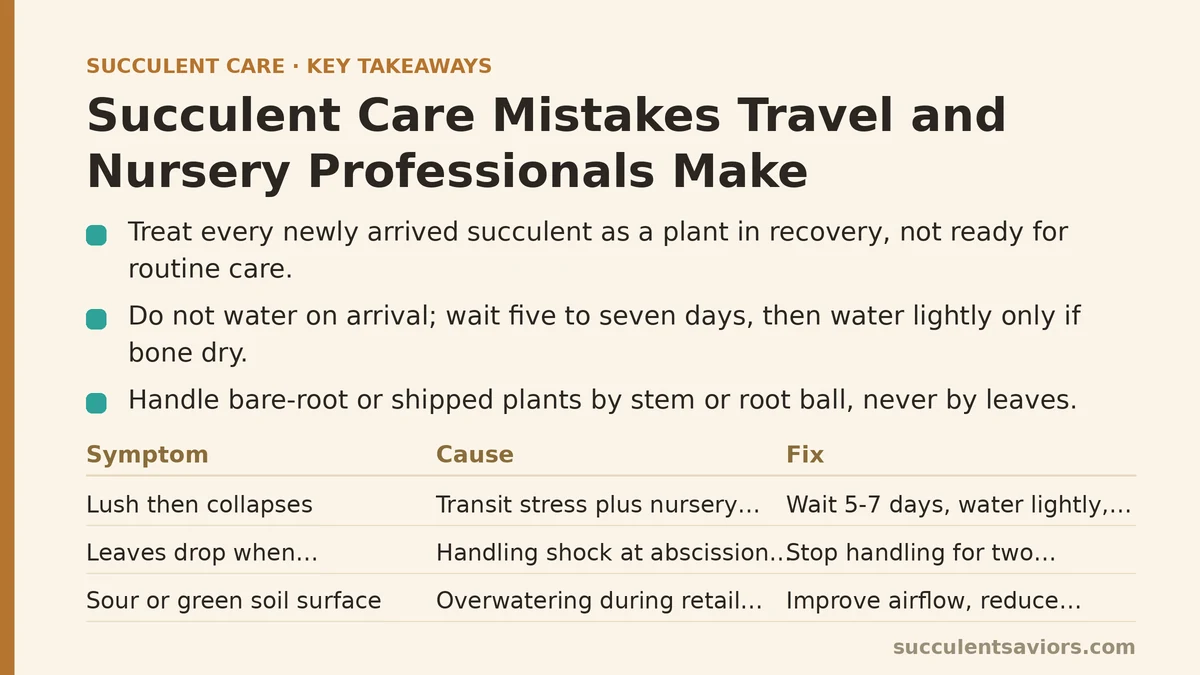
Symptom: The Plant Arrives Lush and Green, Then Collapses Within Two Weeks
Cause: Transit-induced stress combined with a watering schedule built for the nursery, not the home.
Nursery stock is typically grown under high light, controlled humidity, and frequent fertigation. When a plant is boxed for shipping or moved to a retail bench, it loses that environment abruptly. The plant looks fine on arrival because it is still running on reserves. The collapse comes later, when the grower—whether a professional or a hobbyist—waters on the old nursery schedule into soil that is now sitting in a cooler, darker, less ventilated spot.
Fix: Treat every newly arrived plant as a plant in recovery, not a plant ready for routine. Do not water on arrival. Wait five to seven days, then water lightly only if the soil is bone dry and the leaves show early give. Keep the plant in bright, indirect light for the first two weeks before moving it to its permanent spot. If the plant came from a greenhouse, expect it to need acclimation to lower humidity over at least ten days. The single most reliable signal that transit stress is fading is new growth at the crown or tips. Until you see that, keep interventions minimal.
Symptom: Leaves Drop Off When You Unpack or Repot
Cause: Handling shock at the abscission layer, common when plants are bare-rooted, jostled in transit, or repotted during an active growth phase.
Succulents form a deliberate separation layer at the base of each leaf. Under stress—physical disturbance, rapid temperature change, or repotting at the wrong time—the plant triggers that layer and drops leaves as a survival move. It is not rot, and it is not a sign of disease. Nursery and market vendors often see this when plants are stacked, bumped, or repotted the same day they arrive.
Fix: Handle bare-root or recently shipped plants by the stem or root ball, never by the leaves. If leaves are already dropping, stop handling the plant entirely for two weeks. Place it in a stable spot with consistent light and no drafts. Resist the urge to repot during this window. Once leaf drop stops and new growth appears, repot if needed. If you must repot a stressed plant, do it dry: use fresh gritty mix, do not water for at least a week, and keep the plant out of direct sun.
Symptom: The Soil Surface Smells Sour or Looks Green/Algal
Cause: Overwatering during retail display, compounded by poor airflow on crowded benches.
Retail succulents are often watered on a schedule designed for customer appeal—plump, glossy leaves sell—rather than for root health. On a crowded bench, pots sit close, air movement is minimal, and water lingers. A sour smell from the soil, green algae on the surface, or fungus gnats circling the pot are all signs that the root zone has been wet too long.
Fix: If you are buying, tip the pot and check whether the drainage hole is wet or clogged. If the soil smells sour or has visible algae, unpot the plant before bringing it home. Trim any black or mushy roots, let the plant air-dry for a day, and repot in fresh, gritty mix. Do not water for a week. If the plant is on your own bench, separate pots to allow airflow, water only when the soil is fully dry, and stop any overhead watering that wets the leaves and soil surface together.
Symptom: The Plant Is Leggy and Pale Despite Bright Light at the Retail Site
Cause: Light measured at the display top, not at the plant crown.
A common error in nursery and market setups is positioning plants so the top of the display receives good light while the base of each pot is shadowed by neighboring pots or by the shelf above. The crown of a succulent—the point where stems emerge from the soil—needs direct or strong indirect light to stay compact. When the crown is shadowed, the plant stretches toward the light source, producing pale, elongated growth and wide spacing between leaves.
Fix: If you are buying, look at the plant’s crown rather than its overall silhouette. A plant with compact, colorful growth at the crown and slightly stretched lower stems can recover; one with pale, stretched growth throughout is likely to need beheading and rerooting. At home, place the pot where light reaches the soil surface, not just the plant’s shoulders. On a shelf, raise the pot on a small riser so neighboring pots do not cast shadows onto the crown. Rotate the pot a quarter turn every week to keep growth even.
Symptom: Plants Split or Scar After Arriving from a Sunny Nursery
Cause: Light shock when moving from high-light production to lower-light retail or home conditions, or the reverse.
Succulents grown under full nursery sun develop thick cuticles and dense pigmentation. When they move to a dimmer retail shelf, the plant does not immediately adjust, and the older leaves may scar or develop dry patches. The opposite also happens: a plant raised in a shaded greenhouse moves to a sunny windowsill and the leaves blister or split from sudden intense light.
Fix: Always transition light exposure gradually over ten to fourteen days. From high light to low light, reduce exposure by moving the plant into progressively dimmer spots rather than straight into shade. From low light to high, introduce direct sun in one-hour increments, starting in the morning when the sun is softest. A split or scarred leaf will not heal, but it will not kill the plant. Watch the new growth for signs that the plant has adjusted—compact, evenly colored, and firm.
Symptom: Mealybugs or Spider Mites Appear Weeks After Purchase
Cause: Pests introduced at the nursery, in transit, or on shared retail benches, then held dormant or low-level until conditions favor an outbreak.
Pest pressure is highest in crowded commercial settings. Eggs and nymphs hide in leaf axils, under pots, and in the crotches where stems meet the soil line. A plant can leave the nursery looking clean and break out with an infestation three to four weeks later, once it is settled in a warmer, drier home environment.
Fix: Quarantine every new plant for at least four weeks, regardless of how clean it looks. Inspect the undersides of leaves, the crown, and the soil surface weekly with a magnifying glass or phone zoom. If you find mealybugs, treat with 70% isopropyl alcohol on a swab for visible adults, then follow with repeat treatments every four to five days for a month to catch hatchlings. For spider mites, rinse the plant thoroughly, apply insecticidal soap or neem, and repeat every five to seven days for three rounds. Keep the quarantined plant separate from your collection until two consecutive weeks pass with no new signs.
Symptom: Cuttings or Bareroot Plants Rot Immediately After Potting
Cause: Potting into wet soil or watering before the cut end has callused.
Both hobbyists and professionals sometimes receive bare-root plants or cuttings in damp packing material, pot them straight into moist mix, and water them in to “settle” the roots. For succulents, that is a fast path to rot. The cut surface absorbs water, bacteria move in, and the base turns black within days.
Fix: Let every cutting or bare-root plant callus in a dry, shaded spot for three to seven days before potting. The cut end should feel firm and dry to the touch—no tackiness. Pot into dry, gritty mix, and do not water for at least seven days. After that, water lightly around the base of the stem, not over the cut. Wait another week before the first full soak. Resist the urge to tug on the plant to check for roots; a gentle resistance when you lift the stem is the signal that rooting has started.
Symptom: A Whole Tray Dies Overnight After a Market or Show
Cause: Cold shock, condensation, or heat trapped under plastic sheeting during transport.
Plants that spent the day in a warm, humid display and then sit in a cold car overnight or in a sealed bin under a warm sun the next morning can suffer severe tissue damage. Condensation forms on plastic covers, water sits on the leaves, and rapid temperature swings rupture cells. The plant looks fine at night and is a collapsed, translucent mess by morning.
Fix: Never seal plants in plastic for more than a few hours. Use breathable crates or open trays for transport. If you must cover plants overnight, use a light cloth rather than plastic, and remove it as soon as the car or room warms. On hot days, avoid leaving plants in a closed vehicle; even a fifteen-minute stop can push cabin temperatures high enough to cook leaves. For cold-weather transport, keep plants above 45°F (7°C) and insulate the crate with newspaper or a towel rather than wrapping individual plants.
Quick Reference: Symptom, Cause, Fix
| Symptom | Likely Cause | Primary Fix |
|---|---|---|
| Lush on arrival, then collapses | Transit stress + wrong watering schedule | Wait 5–7 days, water lightly, acclimate over 2 weeks |
| Leaves drop on unpacking | Handling shock at abscission layer | Stop handling, hold off repotting for 2 weeks |
| Sour soil smell, algae, gnats | Overwatering in crowded retail display | Unpot, trim rot, repot in dry gritty mix, no water 1 week |
| Leggy, pale growth despite light | Crown shadowed by neighboring pots | Raise pot, ensure light reaches soil surface |
| Split or scarred leaves after move | Light shock from sudden exposure change | Transition light over 10–14 days in increments |
| Pests appear weeks after purchase | Hidden eggs/nymphs from nursery or bench | Quarantine 4 weeks; treat on a repeat schedule |
| New cuttings rot after potting | Wet soil or watering before callus forms | Callus 3–7 days, pot dry, wait 7 days to water |
| Whole tray dies overnight | Cold shock or condensation under plastic | Breathable transport, no sealed plastic, insulate in cold |
The Pattern Behind These Mistakes
The common thread across all of these failures is a mismatch between the plant’s natural pace and the pace of human logistics. Nurseries, shippers, and market vendors all operate on schedules set by sales, not by biology. The plant that thrives is the one whose handler slows down at the moments that matter: waiting five days to water, waiting a week to repot, waiting a month to reintegrate a quarantined plant. None of these delays are wasted time. They are the interval the plant needs to catch up with the change it just experienced.
If you sell or trade your own plants, the same principle applies in reverse. Do not repot on the morning of a market. Do not water the night before a show to make leaves look plumper—wet soil plus handling stress is how root rot starts. Pack for airflow, not for tight stacking. And when a customer asks why the plant they bought last month is dropping leaves, ask what changed in its environment before assuming disease. Most of the time, the plant is simply still adjusting to a transition that began on your bench.
Which of these situations have you run into—a plant that arrived healthy and declined, or a tray that failed after a market day?
Related guides: Step-by-Step Guide to Repotting Succulents Without Shock, Succulent Care Guide for Frequent Travelers and Business Trips, and Why Succulent Leaves Turn Mushy: Common Mistakes and Fixes.