Underwatering and overwatering look like opposites on paper, but they produce surprisingly similar symptoms on a succulent—and that overlap is where most beginners get into trouble. A shriveled leaf and a mushy leaf can both mean “something is wrong with my watering,” yet the fix for one will kill the plant faster than the other. Learning to read the fine distinctions is the single most useful skill you can develop.
This post uses a myth-versus-reality format, because most watering problems come from a handful of assumptions that feel logical but fall apart in practice. Each section pairs the belief with what the plant is telling you and how to respond.
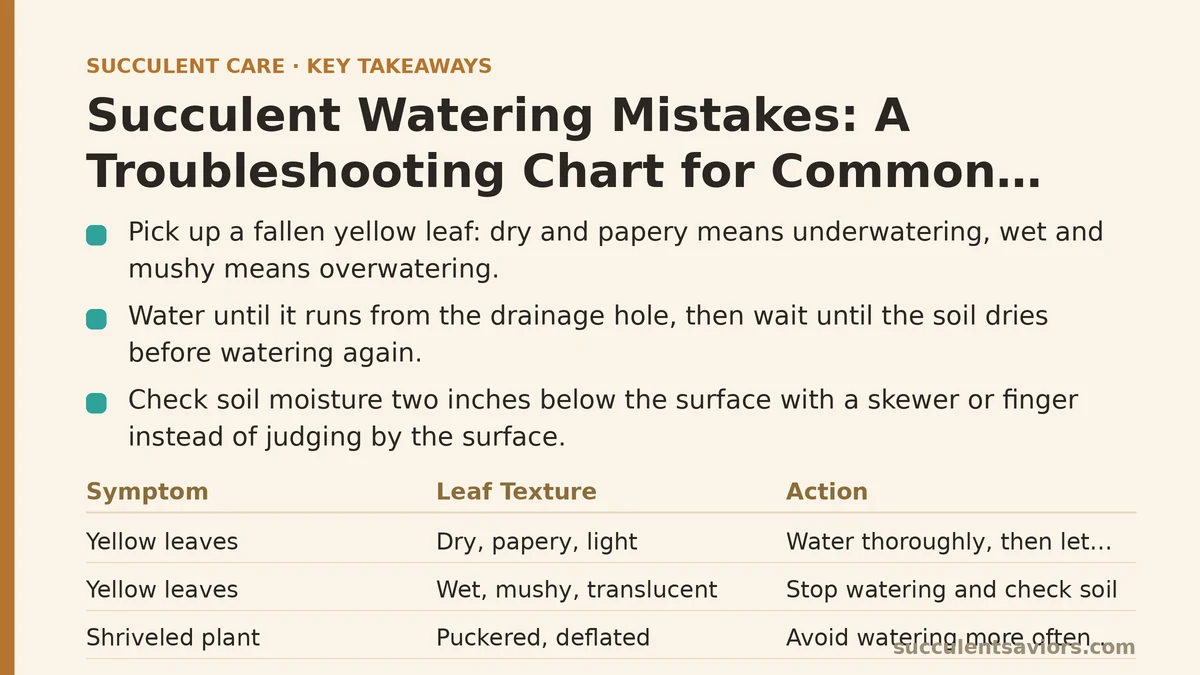
Myth: Yellow Leaves Always Mean Overwatering
The instinct is reasonable—yellowing is the classic distress color—but it is not a reliable single signal. A succulent that has gone too long without water will often drop its oldest leaves first, and those leaves turn yellow before they shrivel and crisp. An overwatered succulent also produces yellow leaves, but they arrive mushy and translucent, sometimes with a soft, almost gelatinous feel.
Reality check: The texture is the deciding factor, not the color. Pick up a fallen leaf. If it is dry, papery, and light, the plant is shedding to conserve water. If it is heavy, wet, and darkens when you press it, water is sitting in the soil and the roots are suffocating.
What to do: For dry, papery yellowing, water thoroughly and then let the soil dry completely before the next round. For wet, translucent yellowing, stop watering entirely and check the soil two inches below the surface. If it is still damp after several days, unpot the plant and inspect the roots for brown, soft tissue.
Myth: A Little Water Every Few Days Is Safer Than a Deep Soak
This is the most common watering habit among new growers, and it is the one that causes the most slow decline. Small, frequent sips keep the soil surface damp while the lower root zone stays bone dry. The plant sends shallow roots upward chasing moisture, and those roots are the first to suffer when the top layer dries out completely.
Reality check: Succulents evolved for infrequent, heavy rainfall followed by long dry spells. Their roots expect a full soak and then a period of nothing. Frequent small waterings mimic neither condition—they create constant dampness at the surface and permanent drought below.
What to do: Water until it runs freely from the drainage hole, then wait. Depending on your climate, pot size, and soil mix, that might mean watering every ten days in summer and every three weeks in winter. Use the soil as your calendar, not the day of the week.
Myth: The Soil Looks Dry, So It Must Be Time to Water
Surface dryness is deceptive, especially in pots with a gritty top dressing. The top inch can be powder-dry while the root ball two inches down is still holding moisture from last week.
Reality check: A wooden skewer or a finger pushed to the second knuckle tells you more than the surface ever will. Pull the skewer out and feel it. If it comes away cool and slightly damp, wait. If it is dry and warm, water.
What to do: Standardize a check depth for each pot. Small pots may only need an inch of probing; larger, deeper pots often need two or three. The goal is consistency—same depth every time—so you learn what your soil does between waterings.
Myth: Watering More Often Helps a Shriveled Succulent Recover Faster
When a succulent looks puckered and deflated, the urge is to water it daily until it plumps. In practice, that pattern drowns roots that were already stressed by drought and can tip the plant straight into rot.
Reality check: A shriveled plant is thirsty, not starving for volume. One thorough soak rehydrates the soil and the roots, and the leaves typically firm up within three to seven days. If they do not, the problem is usually the roots—not the amount of water.
What to do: Soak once, wait a week, and reassess. If the leaves stay limp, unpot the plant. You may find dry, dead roots that are no longer absorbing anything, which means repotting into fresh soil is the fix, not more water.
Myth: Any Container Works As Long As It Has a Hole
Drainage holes matter, but they are not the whole story. Glazed ceramic, unglazed terracotta, plastic, and fabric pots all dry at very different speeds, and that changes how often you should water.
Reality check: Unglazed terracotta wicks moisture through its walls and dries fastest—ideal for growers who tend to overwater. Glazed ceramic and plastic retain moisture longer, which suits drier climates or plants in bright, hot windows. Fabric pots dry quickly and are forgiving, but they are less common indoors because they can leave rings on shelves.
What to do: Match the pot to your habits. If you water on impulse, choose terracotta. If you forget for weeks at a time, plastic or glazed ceramic gives you a longer buffer. Whichever you pick, water based on how that specific pot dries, not on a general rule.
Myth: All Succulents Need the Same Watering Schedule
A jade plant and a Lithops can sit on the same shelf and need completely different watering. Jade grows actively and wants regular moisture during the growing season. Lithops have a dormant period where any water at all can split or rot them.
Reality check: Watering schedules are species-specific, and they also shift with season, light, and temperature. A plant in a south-facing window in summer uses water far faster than the same plant in a shaded corner in winter.
What to do: Group plants by water need rather than by appearance. Keep a simple note for each pot—last watered date and how dry the soil was—and adjust as seasons change. Two or three weeks of observation will tell you more than any generic chart.
Troubleshooting Quick Reference
| What You See | Likely Cause | First Response |
|---|---|---|
| Leaves dry, papery, and curling inward | Underwatering | Soak thoroughly; check soil two inches down before next watering |
| Leaves yellow, mushy, and translucent | Overwatering or root rot | Stop watering; unpot and inspect roots for brown, soft tissue |
| Leaves plump but stems soft at soil line | Root rot starting | Unpot, trim rotted roots, repot in dry gritty mix |
| Leaves puckered but soil feels damp | Roots not absorbing water | Inspect roots; likely dead or compacted, repot if needed |
| Leaves dropping suddenly with no color change | Temperature or shock stress | Check for cold drafts or heat sources; adjust placement |
| Soil surface dry but skewer damp below | Overwatering habit | Lengthen interval; standardize a check depth |
Building a Routine That Works
The fastest way to stop guessing is to slow down and observe. Water one plant at a time, and note how long it takes to dry in its current spot. Check the soil with the same tool and the same depth each time so your readings are comparable. When in doubt, wait an extra day—succulents tolerate drought far better than they tolerate wet roots.
If you have killed a plant by watering, you are in good company. Most growers overcorrect in one direction before finding the middle. The plant will forgive a missed watering. It rarely forgives a week of soggy soil.
Which watering mistake has cost you a plant—the deep soak you skipped, or the small sips you gave too often?
Related guides: Succulent Leaves Turning Translucent and Mushy: 5 Causes Ranked From Most to Least Likely, Aeonium Care Guide: Troubleshooting Common Problems, and Why Succulent Leaves Turn Mushy: Common Mistakes and Fixes.