Leaf drop in succulents is the premature detachment of leaves from the stem before they have dried, yellowed naturally, or been physically damaged. It is not a single disease or a single mistake. It is a symptom that points to one of several underlying stresses, and the specific way the leaves fall is the clue that tells you which one. Some succulents drop leaves as a normal response to drought; others drop them because the roots have rotted and the plant is shedding weight it can no longer support. Telling these apart is the whole skill.
This walkthrough follows one plant through the full diagnostic process, from the first dropped leaf to a stable recovery, weaving the general rules into the sequence as they become relevant.
The Plant That Started the Investigation
The subject is a two-year-old jade plant, roughly 10 inches tall, sitting on a north-facing windowsill in a 4-inch terracotta pot. It had been stable for months. Then, over about ten days, five leaves came off the lower stem. Not shriveled leaves—plump, green leaves, some still firm to the touch. They simply popped off with the lightest brush. The soil felt dry on top. The grower’s first instinct was to water more.
That instinct is the most common wrong turn in this situation, so it is worth pausing on the reasoning before acting on it.
When a succulent leaf detaches while it still looks healthy, there are usually three explanations competing: the plant is shedding leaves to conserve water (drought stress), the roots have failed and cannot take up water at all (rot), or the plant has been shocked by a sudden change in environment. Each one produces a slightly different leaf. Learning to read that difference is what separates a fast fix from a slow decline.
Reading the Fallen Leaf Before You Do Anything Else
Pick up one of the dropped leaves and examine it closely under good light. Squeeze it gently. Smell the end that attached to the stem.
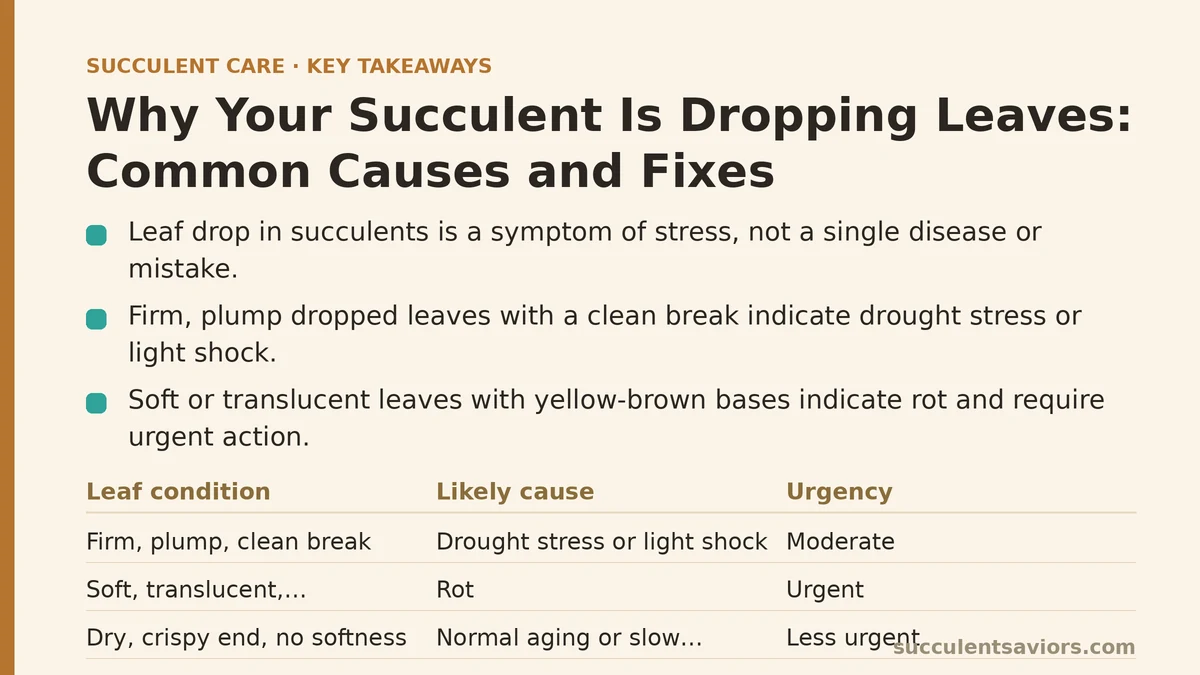
Firm, plump leaf, clean break: drought stress or light shock. The leaf was healthy and the plant let it go deliberately.
Soft or translucent leaf, yellow-brown at the base: rot. The tissue has been dying for some time and the plant is dropping it to limit the spread.
Leaf that feels normal but the stem end is dark or mushy: rot traveling up the stem. This is the most urgent version.
Dry, crispy leaf end with no softness: normal aging or a long, slow drought response. Less urgent.
In our jade plant’s case, the dropped leaves were firm and clean at the break point. That ruled out active rot and pointed to stress-shedding. But the soil was dry, which meant the obvious answer—underwatering—was only half right.
The Underwatering Trap
It is easy to assume a plant dropping plump leaves needs more water. The logic seems airtight: the plant is losing leaves because it is thirsty, so water it. In practice, this often makes things worse.
Succulents store water in their leaves and stems, and they shed leaves as a survival strategy when water becomes scarce. The plant is not waiting for you to rescue it; it has already decided to reduce its own surface area to survive. Watering heavily at that moment can shock the same roots that have been sitting dry for weeks, and if drainage is poor, it can tip a dry plant straight into rot.
The correct response to drought-shedding is a gradual one. Water thoroughly, let the pot drain completely, and wait. Do not water again until the top inch of soil is dry and the remaining leaves show the very first hint of softening. If the plant stops dropping leaves within a week or two, the diagnosis was right. If it keeps dropping, especially after watering, the problem is elsewhere.
The Soil That Was Holding Water Two Inches Down
The jade plant had been repotted into a standard potting mix, not a succulent mix. Terracotta dries faster than plastic, which had masked the issue on the surface, but two inches down the soil was still dense and moisture-retaining. The roots were sitting in a compacted layer that stayed wet long after the top inch had dried. That is exactly the condition that produces rot in a plant that looks dry on the surface.
This is where a second, sneakier cause of leaf drop lives: chronic mild overwatering that never looks like overwatering. The soil surface reads dry; the root zone does not. Leaves drop one at a time, often from the lower stem, and the plant slowly declines over weeks rather than collapsing overnight.
To check for this, unpot the plant far enough to see the root ball, or probe gently with a chopstick down to the bottom of the pot. If the lower soil is damp and dark, and the roots are brown instead of white, you have found the real problem, regardless of what the surface looks like.
Where Light Shock Fits In
The jade plant had also been moved two weeks earlier, from a south-facing room to a north-facing sill, to make space for a new acquisition. That move cut its light dramatically. Succulents respond to a sudden light reduction by shedding leaves, because the leaves they grew under strong light are expensive to maintain in weak light. The plant drops them rather than keep feeding tissue that cannot pay for itself.
Light shock usually shows up as leaf drop from the middle and lower stem, with no softness or discoloration at the break. It tends to occur within one to three weeks of a move. The fix is not to move the plant back abruptly but to increase light gradually, either by relocating it closer to a window over several days or by adding a grow light on a timer. A sudden blast of direct sun after a period of shade causes its own damage, so the transition matters.
Here is how the three leading causes compare side by side, using the signals you can observe:
| Cause | Leaf feel | Base of fallen leaf | Timing pattern | First fix |
|---|---|---|---|---|
| Drought stress | Firm, plump | Clean, no discoloration | gradual, lower stem first | Water thoroughly, then soak-and-dry cycle |
| Root rot | Soft, translucent | Yellow-brown or dark, mushy | steady, often after watering | Unpot, trim rot, repot in gritty mix |
| Light shock | Firm, plump | Clean | within 1–3 weeks of a move | Increase light gradually |
| Normal aging | Dry, thin | Dry and papery | one or two at a time, very slow | No action needed |
| Pest damage | Variable | Often scarred or webbed | erratic, often with visible pests | Inspect leaf undersides, treat accordingly |
The Fix, Step by Step
For the jade plant, two problems overlapped: soil that was too water-retentive and a sudden light reduction. Both had to be addressed, and neither alone would have solved the leaf drop.
Step 1: Repot into a gritty mix. The plant was unpotted, the roots rinsed, and any brown or mushy sections cut away with clean scissors. Healthy roots are pale and firm; rot smells faintly sour and collapses under light pressure. The plant went into a mix of roughly two parts potting soil to one part perlite, in a pot with a drainage hole.
Step 2: Hold off watering for five to seven days. Freshly disturbed roots need time to callus before they meet moisture. Watering immediately after repotting is one of the most common ways a repot turns into rot.
Step 3: Increase light gradually. Over ten days, the plant moved in stages from the north sill to a spot near an east window, where it received bright morning sun without the harsh afternoon heat.
Step 4: Resume a soak-and-dry watering rhythm. Water until it runs from the drainage hole, then wait until the soil is dry at least an inch down before watering again. In cooler months, that may mean watering every two to three weeks. In summer, closer to weekly.
Step 5: Watch the new growth, not the old stem. The lower stem stayed bare. That is normal and permanent. The signal that the plant has recovered is new leaves at the growing tips, appearing within three to five weeks of the fix. Judge success by new growth, not by whether the old leaves come back.
What to Check Before You Water Again
Once the immediate problem is under control, small habits prevent the next round of leaf drop.
- Check the soil at depth, not just the surface. A chopstick or moisture meter pushed two inches down tells you far more than the top of the pot.
- Match pot material to your habits. Terracotta dries faster and suits growers who water frequently. Glazed ceramic and plastic hold moisture longer and suit growers who forget.
- Use a drainage hole. A pot without one turns any watering mistake into a rot event.
- Repot when the mix breaks down. Most commercial succulent soils become compacted within 18–24 months, at which point they hold water far longer than they did when fresh.
- Keep light consistent. Sudden moves, especially into low light, are a common trigger for leaf drop in winter.
- Inspect the undersides of leaves monthly. Fine webbing and pale stippling point to spider mites, which cause leaf drop through continuous feeding damage.
When Leaf Drop Is Not a Problem
Not every dropped leaf is a cry for help. Some succulents, including certain Kalanchoe species and some Crassula varieties, shed lower leaves as they grow taller, essentially replacing old tissue with new. If the leaves that fall are dry, thin, and papery at the base, and the plant is producing healthy new growth at the top, no action is needed. This is the plant working as designed.
The distinction that matters is the condition of the leaf and the direction of the plant’s overall growth. Dropping dry, spent lower leaves while pushing new top growth is aging. Dropping plump, green leaves while the plant stalls is a stress response.
The Takeaway
Leaf drop is not a diagnosis; it is a question the plant is asking. The answer lives in the fallen leaf—its firmness, its color at the break point, and the timing of when it fell. Drought stress, rot, light shock, pests, and normal aging all produce leaf drop, but they produce different leaves, and they call for different responses. Read the leaf first, then act. If the plant is still dropping plump leaves two weeks after you have corrected the most likely cause, the second cause is probably at work, and it is worth unpoting to look at the roots directly.
Have you had a succulent drop plump, green leaves with no obvious explanation—and if so, what turned out to be the cause?
Related guides: String of Pearls Care Guide (Senecio rowleyanus): A Troubleshooting Approach, Common Mistakes Treating Succulent Pests: Mealybugs & Spider Mites, and Succulent Pest Treatment with Neem Oil: A Step-by-Step Beginner Guide.